
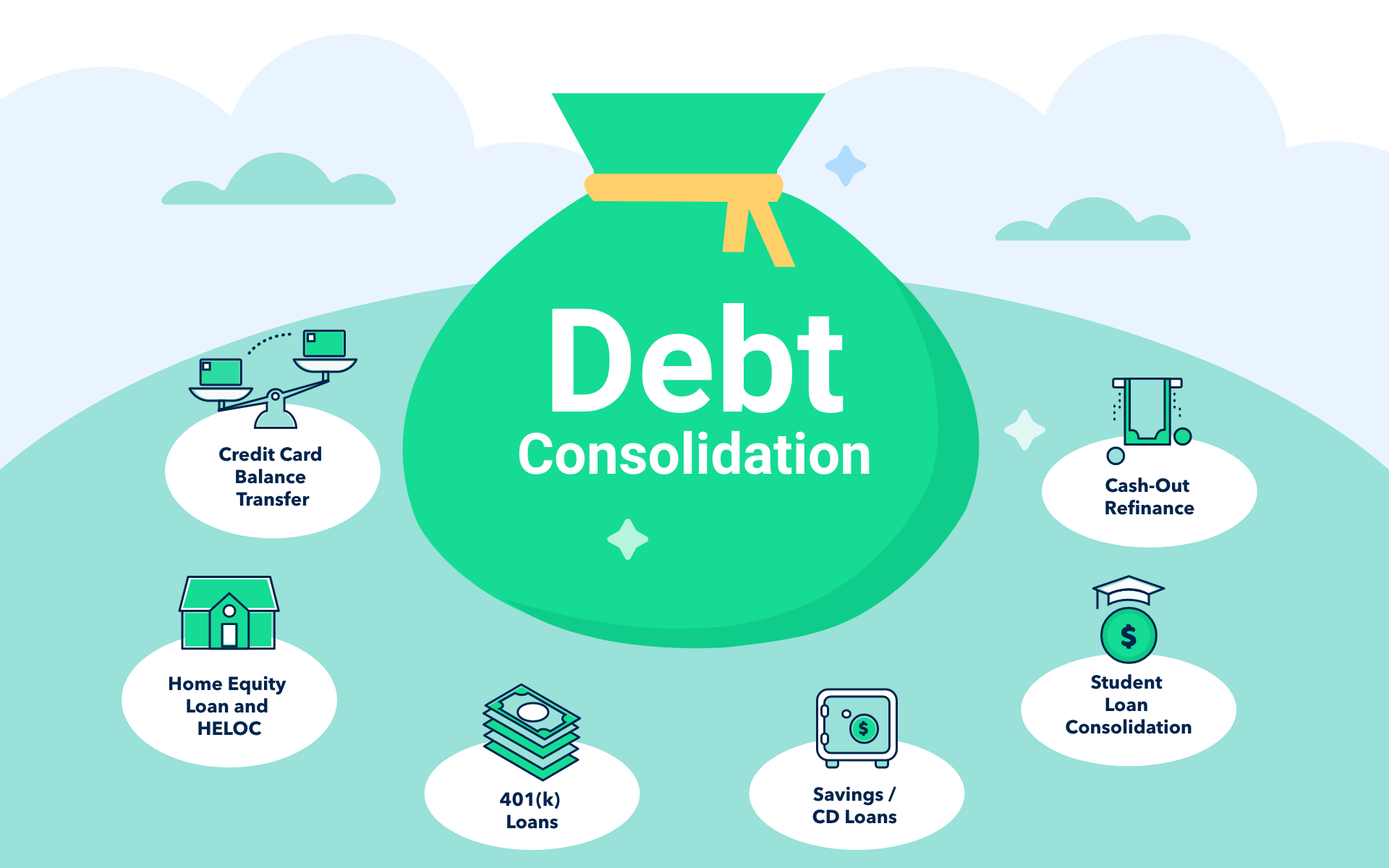
Debt Consolidation: Simplifying the Path to Financial Freedom
In 2026, debt consolidation has become a primary strategy for households looking to escape the cycle of high-interest credit card debt. With the average credit card interest rate hovering near 23%, moving multiple balances into a single, lower-interest loan can save thousands in interest and cut years off your repayment timeline.
The Strategy of Interest Rate Arbitrage
The core benefit of consolidation is “interest rate arbitrage”—moving debt from a high-interest environment to a lower one. In 2026, personal loan rates for qualified borrowers are often 10% to 12% lower than standard credit card rates.
- Lowering the APR: By securing a consolidation loan with a lower Annual Percentage Rate (APR), a larger portion of your monthly payment goes toward the principal balance rather than just covering interest charges.
- Predictable Fixed Payments: Unlike credit cards, which have fluctuating minimum payments, a consolidation loan offers a fixed monthly amount. This makes budgeting easier and ensures the balance reaches zero by a specific date.
- Simplified Management: Consolidating turns five or six different due dates and login portals into one single payment, drastically reducing the risk of accidental late fees.
Choosing the Right Consolidation Tool
Not all consolidation is the same. In 2026, lenders use AI-driven underwriting to offer highly personalized products based on your specific debt-to-income (DTI) ratio and credit history.
- Unsecured Personal Loans: The most common route. These don’t require collateral (like your home or car) and typically offer terms between 2 and 7 years. They are ideal for medium-to-large balances ($5,000–$50,000).
- 0% Balance Transfer Cards: Best for smaller debts that can be paid off quickly. Many cards in 2026 offer an introductory 0% APR for 15 to 21 months, though they usually charge a 3% to 5% upfront transfer fee.
- Home Equity Options (HELOCs): For homeowners with significant equity, a HELOC can offer the lowest interest rates available. However, this carries the risk of losing your home if you cannot keep up with payments.
Avoiding the “Consolidation Trap”
Consolidation is a tool for restructuring debt, but it does not “erase” it. Success in 2026 requires a behavioral shift to ensure the debt disappears for good.
- The “Double Debt” Risk: The most common pitfall is paying off credit cards with a loan and then using the cards again. This leaves you with both the new loan payment and new credit card debt.
- Watching the Fees: Always calculate the “origination fee” of a loan (which can be 1% to 10%). If the fee is too high, it might negate the savings from the lower interest rate.
- Impact on Credit Score: Applying for a loan causes a small, temporary dip in your credit score due to a “hard inquiry.” However, as you pay off revolving credit card balances, your credit utilization ratio improves, which usually results in a significant score boost within 60 to 90 days.
Final Thoughts
Debt consolidation is most effective when viewed as a “strategic reset” rather than a magic fix. In 2026, the most successful borrowers are those who use the lower monthly payment to accelerate their payoff or build an emergency fund. If you have a stable income and a credit score above 650, consolidation can be the bridge that moves you from “just getting by” to true financial stability.