
7 Signs You Might Need Foundation Repair: What Every Homeowner Should Know
Foundation problems can be a homeowner’s worst nightmare. If left unaddressed, they often lead to costly repairs and structural instability. Let us help you navigate this tricky situation. While the thought of foundation repair can feel overwhelming, recognizing the early signs can make a massive difference in managing the issue and protecting your biggest investment.
Ignoring these warnings can lead to extensive damage throughout your house, impacting everything from your floors to your roof. Understanding the integrity of your home’s foundation is absolutely essential, as it is the bedrock upon which your entire property stands.
This guide will walk you through seven key indicators that suggest your home might be experiencing foundation issues, helping you catch potential problems before they escalate.
1. Cracks in Walls, Floors, or Ceilings
It is normal for homes to settle slightly over time, which can cause tiny, hairline cracks in your drywall. However, you need to keep an eye out for serious structural cracks. Look for cracks that form a zig-zag pattern, run horizontally across the wall, or are wider than a 1/4 inch.
These larger cracks strongly indicate that your house is shifting and placing severe stress on the foundation. A great tip is to trace the crack with a pencil and check back in a month; if the crack has extended past your mark, the shifting is active and needs professional attention.
2. Uneven or Sagging Floors
If you feel like you are walking downhill in your own living room, you might have a foundation issue. Uneven or sagging floors often point directly to foundation settlement or problems with your pier and beam structure.
You don’t need fancy equipment to test this out. Grab a standard carpenter’s level from your toolbox and place it on the floor in a few different rooms. Alternatively, place a marble on the floor and see if it rolls away on its own. Identifying this sloping early can save you from a complete floor overhaul.
3. Doors and Windows That Stick or Don’t Close Properly
Have you noticed that your bedroom door suddenly won’t latch, or a window is incredibly stubborn to open? While humidity can sometimes cause wood to swell, persistently sticking doors and windows are a common sign of foundation movement.
When a foundation shifts, it pulls the structure of the house with it. This twists the frames out of their original square shape. If you have to forcefully yank a door shut or prop a window open, it is time to look a little deeper at what is happening beneath your home.
4. Gaps Around Window and Door Frames or Between Walls and Ceilings
Visible separation around your frames or where your walls meet the ceiling is not just an aesthetic annoyance. These gaps indicate significant structural movement and underlying stress on the bones of your house.
When the foundation settles unevenly, the walls are pulled away from their joints. Caulking over these gaps might hide the problem temporarily, but it won’t fix the underlying cause. It’s better to treat the root of the problem mechanically than to just cover it up cosmetically.
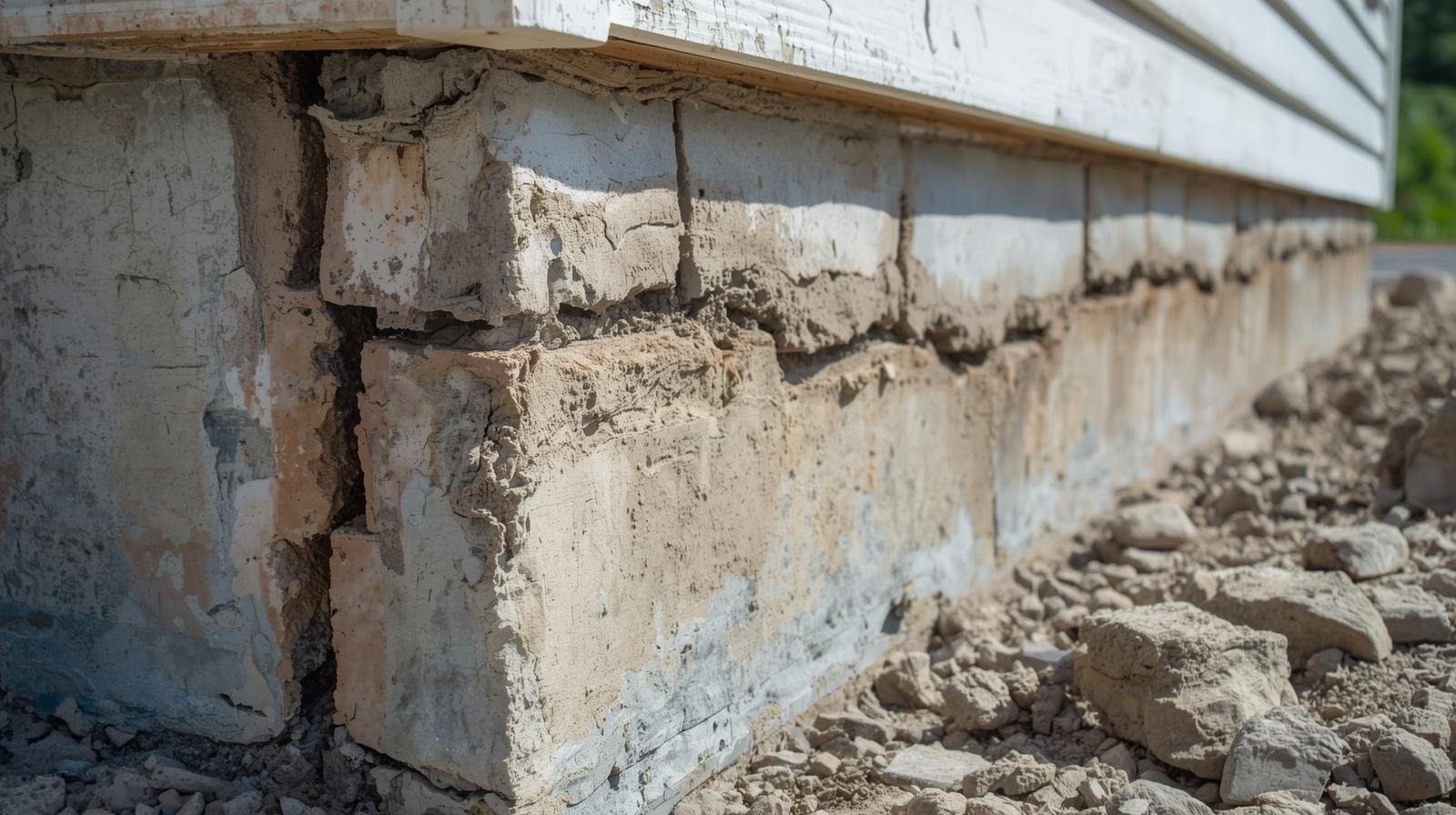
5. Sinking or Settling of Exterior Foundation
Take a walk around the outside of your house and closely examine the concrete at the base. If you notice visible sinking, or if one side of the house appears visibly lower than the other, you are dealing with exterior foundation settling.
According to real estate and structural experts, severe foundation issues can reduce a home’s overall value by 10 to 15 percent. Addressing these external, visible signs of sinking is an urgent matter that requires a professional structural assessment to prevent localized collapse.
6. Pooling Water or Excessive Moisture Near the Foundation
Water is a foundation’s worst enemy. Poor drainage causes the soil around your home to expand when wet and contract when dry. This constant movement puts immense pressure on your concrete slab or basement walls.
If you notice water pooling near the base of your house after a rainstorm, or excessive moisture trapped against the concrete, you need to act fast. A helpful, inexpensive tip is to install gutter extensions to ensure rainwater is diverted at least five feet away from the base of your home.
7. Bowing or Leaning Basement Walls
For homes with basements, inward bowing or leaning walls are a massive red flag. This happens when the soil outside expands with moisture and presses against the basement walls with incredible force.
This is a serious structural issue that compromises the safety of your home. If you notice a curve in your basement walls or horizontal cracks accompanying a bulge, you should not wait to get it looked at.
Final Thoughts
Recognizing these signs early is the very first step toward safeguarding your home against severe foundation damage. While some minor issues might just be superficial quirks of an older house, many of the signs above indicate a strong need for a professional assessment.
Promptly addressing foundation problems prevents much more extensive and costly repairs down the line, preserving your home’s structural integrity, safety, and market value. If you have noticed any of these warning signs around your property, reach out to a certified foundation repair specialist in your area today to schedule a comprehensive inspection. Investing in your foundation now means securing the long-term health of your home for years to come.