
The Ultimate Guide to Smart Mirrors and Beauty Tech in 2026
Good lighting changes how makeup and skincare go on, which is why the lit vanity mirror was the first piece of beauty tech most people bought. Today the category is much wider. There are mirrors with adjustable color temperature, mirrors with built-in displays and speakers, cameras that track skin over time, and handheld devices for cleansing, LED light and microcurrent. Some are genuinely useful. Others are expensive gadgets that end up in a drawer. This guide sorts out what each type does and how to choose.
What Counts as a Smart Mirror
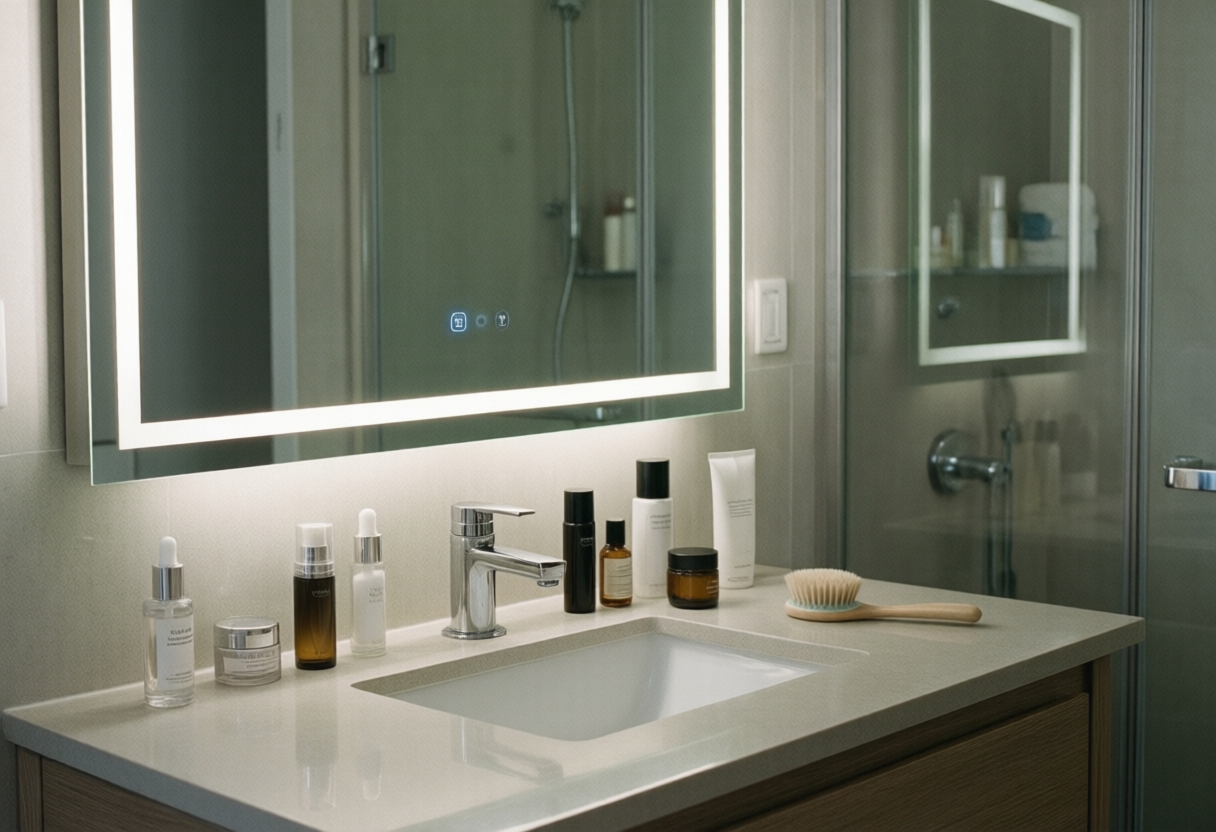
The simplest smart mirrors are LED-lit mirrors with touch controls for brightness and color temperature. Being able to switch between warm and cool light lets you check makeup under conditions closer to an office, a restaurant or daylight. Many add anti-fog heating for bathroom use, magnification and a memory setting.
Further up the range, mirrors include displays that show the time, weather or your calendar, Bluetooth speakers, and app control. A few use cameras and software to photograph your skin and track changes such as redness or dryness over weeks. Those features are newer and less standardized, so reviews from people who used them for a while matter more than the spec sheet.
Tip: Decide where the mirror will go before you shop. A wall-mounted bathroom mirror needs a nearby outlet or hardwiring, while a countertop model only needs space and a plug.
Bathroom Safety, Fit and Lighting Quality
Bathrooms are humid, so look for a mirror built for wet areas with a stated ingress protection rating, such as IP44 or higher, and follow the maker’s guidance on distance from the shower and sink. Hardwired mirrors should be connected by an electrician to a properly protected circuit.
For lighting, a high color rendering index, often listed as CRI 90 or above, means colors look closer to how they appear in natural light. Even light from around the edges reduces shadows under the eyes and chin better than a single light at the top.
Tip: Check the mirror’s size against your vanity and the light switch locations. A mirror that covers a switch or outlet is an awkward fix after installation.
Handheld Beauty Devices: Cleansing, LED and Microcurrent
Sonic cleansing brushes and silicone cleansing devices help some people clean more thoroughly, but they can irritate sensitive skin if used too often or with too much pressure. Starting with a few times a week is a reasonable approach.
LED light masks and wands use red, blue or other wavelengths, and microcurrent devices send low-level electrical current through the skin. Some devices in these categories have FDA clearance for specific uses, while many make broader cosmetic claims. Results vary by person and usually take consistent use over weeks.
Tip: If a device claims to treat acne, wrinkles or another specific concern, look for its FDA clearance for that use, and read the exact wording of the claim rather than the headline on the box.
Privacy, Apps and Buying Smart
A mirror or device with a camera that photographs your face is collecting personal data. Read how the app stores images, whether processing happens on the device or in the cloud, and whether you can delete your data. A physical camera cover or a switch to turn the camera off is a plus.
Apps also decide how long a product stays useful. If key features depend on an app, a company that stops updating it can leave you with a less capable device. A mirror whose lighting works fine without the app is a safer buy. Price-wise, a quality lighted mirror usually delivers more daily value than a costly gadget you use twice.
Tip: If you have a skin condition or are on prescription skincare, ask a dermatologist before adding LED, microcurrent or exfoliating devices to your routine.