
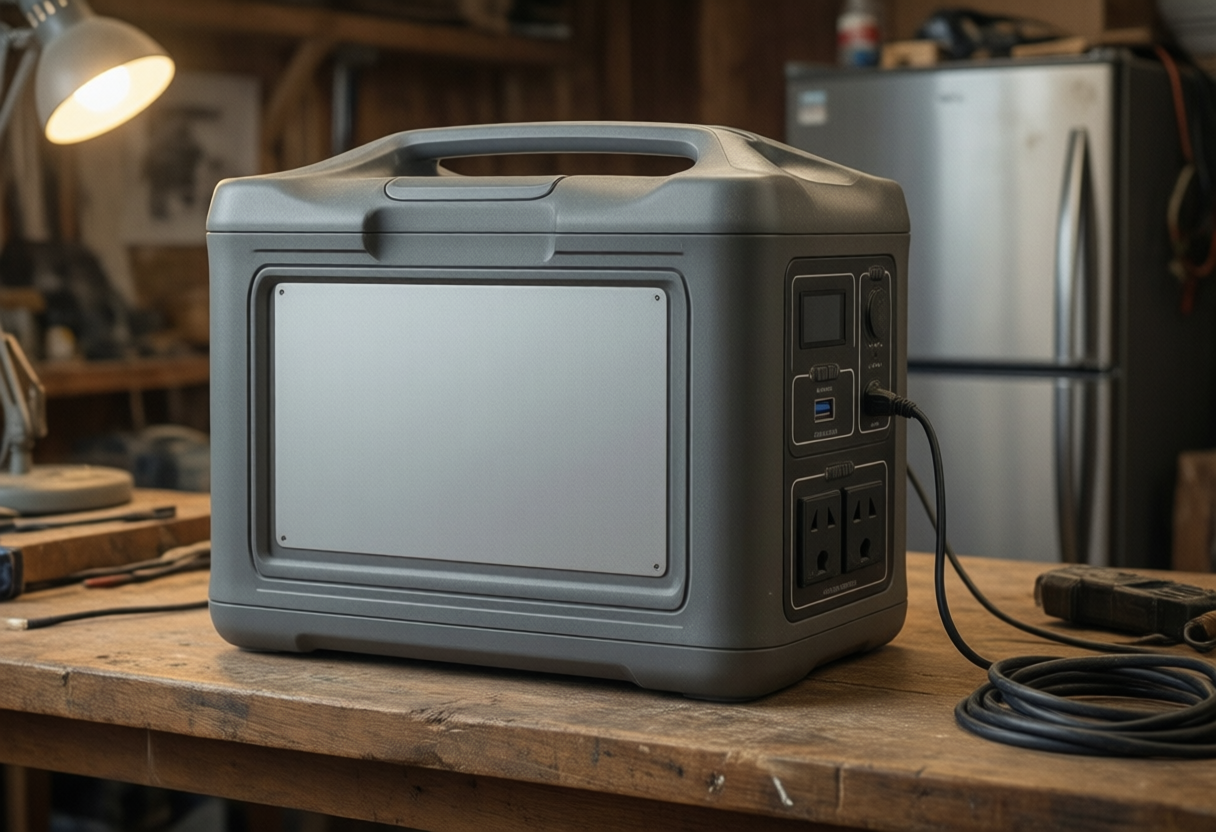
The Ultimate Guide to Portable Power Stations and Home Backup Power in 2026
When the power goes out, most people want the same few things to keep working: the refrigerator, a light or two, phone chargers, the Wi-Fi router and maybe a CPAP machine. A portable power station can handle that list without the noise, fuel and fumes of a gas generator. It is a large rechargeable battery with an inverter and a panel of outlets. The trick is buying one sized for what you actually need. This guide explains the specs that matter, how to estimate runtime, how solar charging fits in, and when it is time to look at whole-home backup.
Capacity, Output and Surge: Reading the Specs
Two numbers matter most. Capacity, in watt-hours (Wh), tells you how much energy the battery stores. Output, in watts (W), tells you how much power it can deliver at one moment. A unit with a large battery but small output can run a lamp for days but cannot start a microwave.
Many appliances with motors, like refrigerators, pumps and power tools, draw a short burst of extra power when they start. Power stations list a surge or peak rating for this. Check that the surge rating covers your biggest motor load, and look for a pure sine wave inverter, which is safer for electronics and medical devices.
Tip: Read the wattage label on each device you plan to run, add them up, and choose a power station whose continuous output beats that total with some margin.
Estimating How Long It Will Run
A rough runtime estimate is capacity divided by the average power draw. A 1,000 Wh unit running a device that draws 100 watts on average would last about ten hours in theory. In practice you get less, because the inverter loses some energy turning battery power into household AC. Planning on roughly 80 to 85 percent of the rated capacity is a safer working figure.
Refrigerators are tricky because the compressor cycles on and off. Its average draw is far lower than its running watts, and it changes with room temperature and how often the door opens. An inexpensive plug-in watt meter will show you real use over a day, which beats any guess.
Tip: During an outage, keep the fridge and freezer doors closed as much as possible. The less often they open, the less often the compressor runs and the longer your battery lasts.
Battery Chemistry, Solar Charging and Safety
Many current power stations use lithium iron phosphate (LiFePO4) batteries, which typically handle far more charge cycles than older lithium-ion types and are more stable. They are a bit heavier for the same capacity. Check the rated cycle count in the specs if you plan to use the unit often.
Most power stations can recharge from wall outlets, car sockets and solar panels. Solar input is limited by the unit’s maximum solar wattage and voltage, so match the panels to those limits. Some units also offer a pass-through or UPS mode that switches to battery when grid power drops, which suits routers and computers.
Battery power stations produce no exhaust, so they are safe to use indoors. Gas generators are not. Never run a generator in a home, garage or near windows, because carbon monoxide can build up quickly.
Tip: Charge the power station fully every few months even if you do not use it, so it is ready when a storm hits.
When You Need Whole-Home Backup
A portable unit plugged into appliances with extension cords works for essentials. If you want to run hardwired circuits like a well pump, furnace blower or kitchen lights, you need a safe connection to your home’s wiring. Some larger power stations pair with a transfer switch or a dedicated panel, and permanently installed home battery systems can back up most of a house, often alongside rooftop solar.
Any connection to your home’s electrical panel should be installed by a licensed electrician. Plugging a power source into a wall outlet to feed the house, sometimes called backfeeding, is dangerous and can put utility workers at risk.
Tip: Make a short list of the circuits you cannot live without during an outage. An electrician can size a transfer switch or battery system around that list instead of the whole house.