
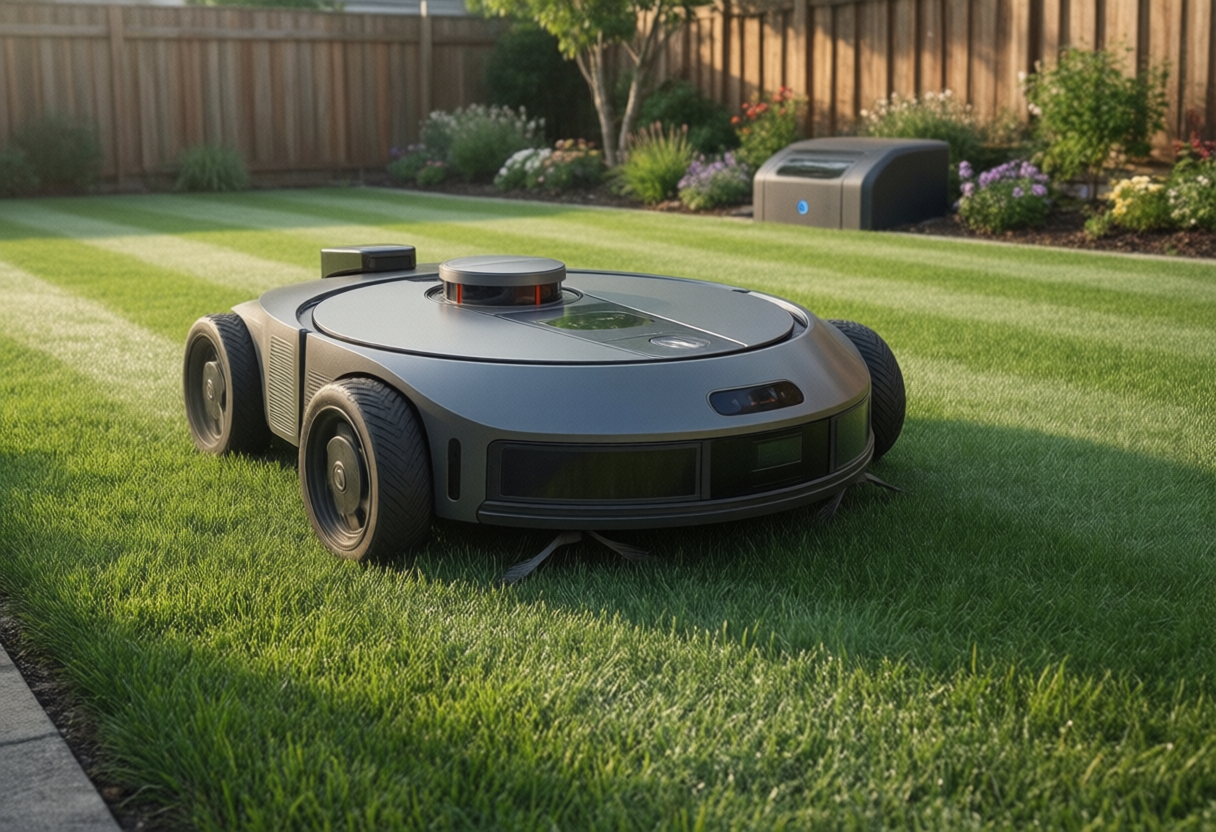
The Ultimate Guide to Robot Lawn Mowers and Lawn Care in 2026
A robot lawn mower trims a little grass often instead of a lot once a week. It runs on a schedule, heads back to its dock to charge, and leaves fine clippings that disappear into the lawn. For many yards that means you stop thinking about mowing at all. Not every yard suits one, though, and the choice between a boundary-wire model and a newer wire-free model matters more than most spec sheets suggest. This guide explains how they work, how to size one for your lawn, and the lawn care habits that keep the grass healthy.
Boundary Wire vs. Wire-Free Navigation
Traditional robot mowers follow a thin boundary wire pegged around the edge of the lawn and around flower beds. The wire carries a low-voltage signal, and the mower turns when it senses it. The system is proven and works under trees, but laying the wire takes an afternoon, and a cut wire from edging or aerating stops the mower until you find the break.
Wire-free mowers map the lawn instead. Many use RTK GPS, which corrects satellite positioning with a small reference antenna in the yard, and some add cameras or other sensors to spot obstacles and edges. Setup usually means driving the mower around the edge once with a phone app. Heavy tree cover and tall buildings can weaken satellite signals, so check how a model handles shaded areas before you buy.
Tip: Walk your yard with a phone map app before choosing. If parts of the lawn sit under dense trees or right against the house, ask the seller how the mower navigates there.
Sizing a Mower to Your Yard
Every robot mower lists a maximum lawn area, and that figure assumes a simple, open lawn. Narrow passages, several separate zones, slopes and lots of obstacles all cut into real coverage, so buying a model rated somewhat above your lawn size gives you room to spare.
Slope rating is the other number to check. If your yard has a steep bank, compare it with the mower’s maximum slope, and look at wheel design. Mowers with larger treaded wheels or all-wheel drive tend to handle hills and damp grass better.
Tip: Count your separate lawn zones. If the front and back lawns are not connected, check whether the mower supports multiple zones or whether you will need to carry it between them.
Safety, Weather and Theft Protection
Robot mowers have sensors that stop the blades when the mower is lifted or tipped, and many slow down or turn when they bump into something. They still have sharp spinning blades. Keep children and pets off the lawn while it runs, and schedule mowing for times when the yard is empty. Night mowing is also hard on hedgehogs and other small animals where they live.
Rain sensors pause mowing in wet weather, which protects the lawn and the mower. For security, look for PIN codes, alarms that sound when the mower is lifted, and app tracking. Some models use GPS to show where the mower is if someone carries it off.
Tip: Pick up toys, hoses, fallen fruit and dog waste before the first runs. Once the mower has a clear lawn for a week or two, you will know which spots need permanent fixes.
Lawn Care Habits That Help a Robot Mower
Robot mowers work well with a common lawn care rule: never cut more than about a third of the grass blade at once. Frequent light trims keep the grass dense and leave short clippings that return nutrients to the soil, so you rarely need to bag them.
Edges are where you still do some work. Most mowers cannot reach the last few inches along walls and fences, so plan on occasional string trimming, or install flat edging stones the mower can drive onto. Keep the blades sharp too. Most robot mowers use small, cheap blades meant to be swapped every few weeks to few months, depending on the lawn.
Tip: Set the cutting height a little higher in hot, dry weeks. Taller grass shades the soil and holds moisture better through a heat spell.