
The Ultimate Guide to Home Repairs in 2026: DIY vs. Hiring a Handyman
Every house hands you a running list of small repairs: a dripping faucet, a sticking door, a hole in the drywall, a loose railing. The question is always the same. Do you grab the toolbox, or do you call someone? The right answer depends on the job, your skills, the tools you own, and how much your time is worth. This guide walks through the jobs most people can handle, the ones that call for a handyman, the ones that legally need a licensed contractor, and how to hire well when you do bring someone in.
Repairs Most Homeowners Can Handle
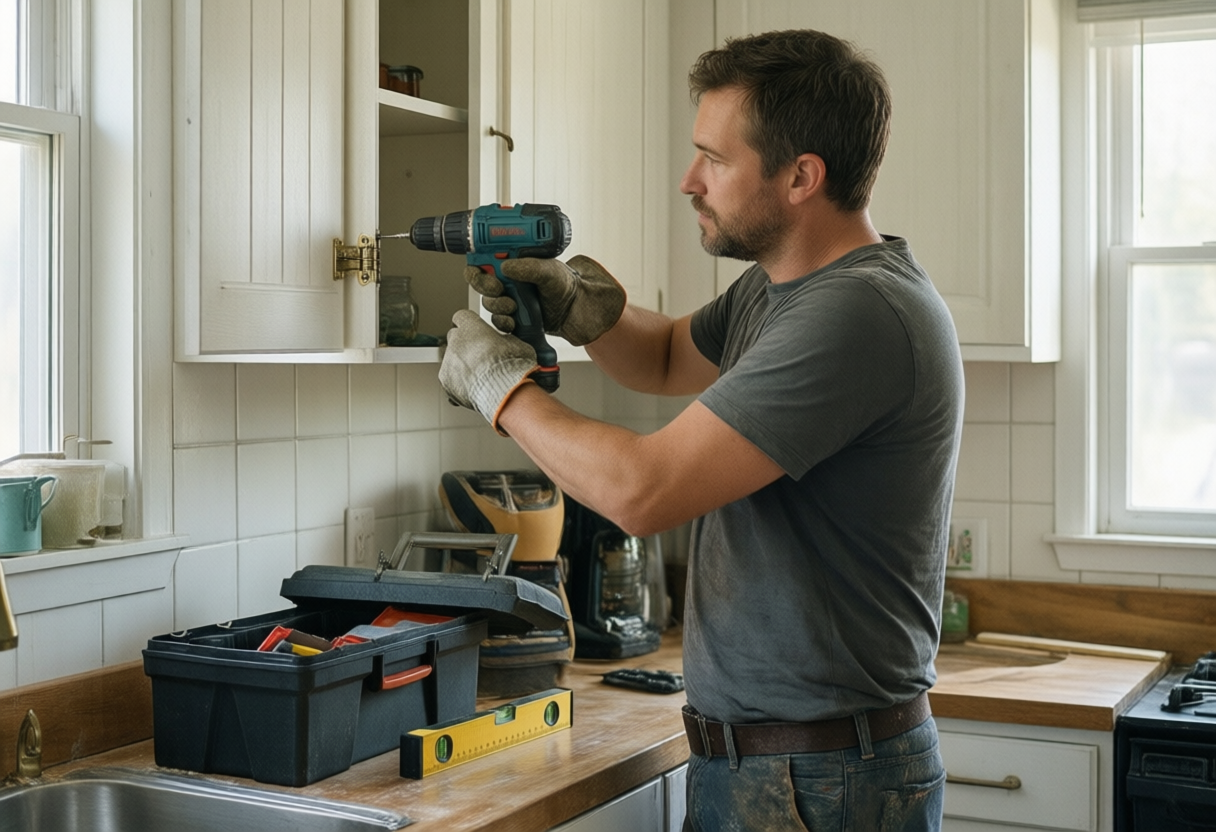
Plenty of fixes need only basic tools and some patience. Patching small drywall holes, replacing a toilet flapper, re-caulking a tub, swapping a cabinet hinge, tightening loose door hardware and changing furnace filters are good first projects. Manufacturer instructions and how-to videos cover most of them step by step.
A basic kit goes a long way: a cordless drill and driver, a tape measure, a level, a utility knife, an adjustable wrench, a stud finder and a few screwdrivers. Buying a tool for a one-time job can still cost less than a service call, and you keep the tool.
Tip: Before any plumbing job, find the shutoff valve for that fixture and the main water shutoff for the house. Knowing where they are turns a burst supply line from a flood into a minor mess.
When a Handyman Makes More Sense
A handyman is a good fit for a list of small jobs that are each too minor for a contractor: hanging heavy mirrors and shelves, assembling furniture, replacing a damaged section of trim, fixing a gate, mounting a TV or installing a storm door. Many will take a half day of mixed tasks, which is often cheaper than paying separately for each one.
Hiring also makes sense when the job needs tools you do not own, a second person, or a ladder height you are not comfortable with. Falls from ladders are a common cause of home injuries, and that risk alone is a fair reason to pay someone with the right equipment.
Tip: Write your list down before you call, with photos and rough measurements. A clear list gets you a more accurate quote and keeps the visit from running long.
Jobs That Need a Licensed Pro and a Permit
Some work is not handyman territory at all. New electrical circuits, panel work, gas lines, moving plumbing, structural changes and most roofing jobs usually require a licensed contractor and a building permit. The rules vary by state and city, and many states cap the dollar value of work an unlicensed handyman may take on.
Skipping a required permit can cause problems later. Insurers may question a claim tied to unpermitted work, and buyers’ inspectors often flag it when you sell. Your local building department can tell you what needs a permit, usually by phone or on its website.
Tip: If a project involves digging, call 811 a few days ahead in the US. The free service marks buried utility lines so a fence post or garden bed does not end with a cut gas or power line.
How to Hire a Handyman You Can Trust
Start with recommendations from neighbors and local groups, then check reviews on more than one site. Ask whether the person carries liability insurance, and ask for proof. If your state licenses handymen or requires registration, look up the license number on the state’s website.
Get a written estimate that lists the tasks, materials, price and timeline. Be wary of anyone who wants full payment up front, pressures you to decide on the spot, or will only take cash. A small deposit for materials is normal on bigger jobs; paying the whole bill before work starts is not.
Tip: Get at least two or three quotes for anything beyond a small repair. The spread between quotes tells you a lot about what the job should cost in your area.